

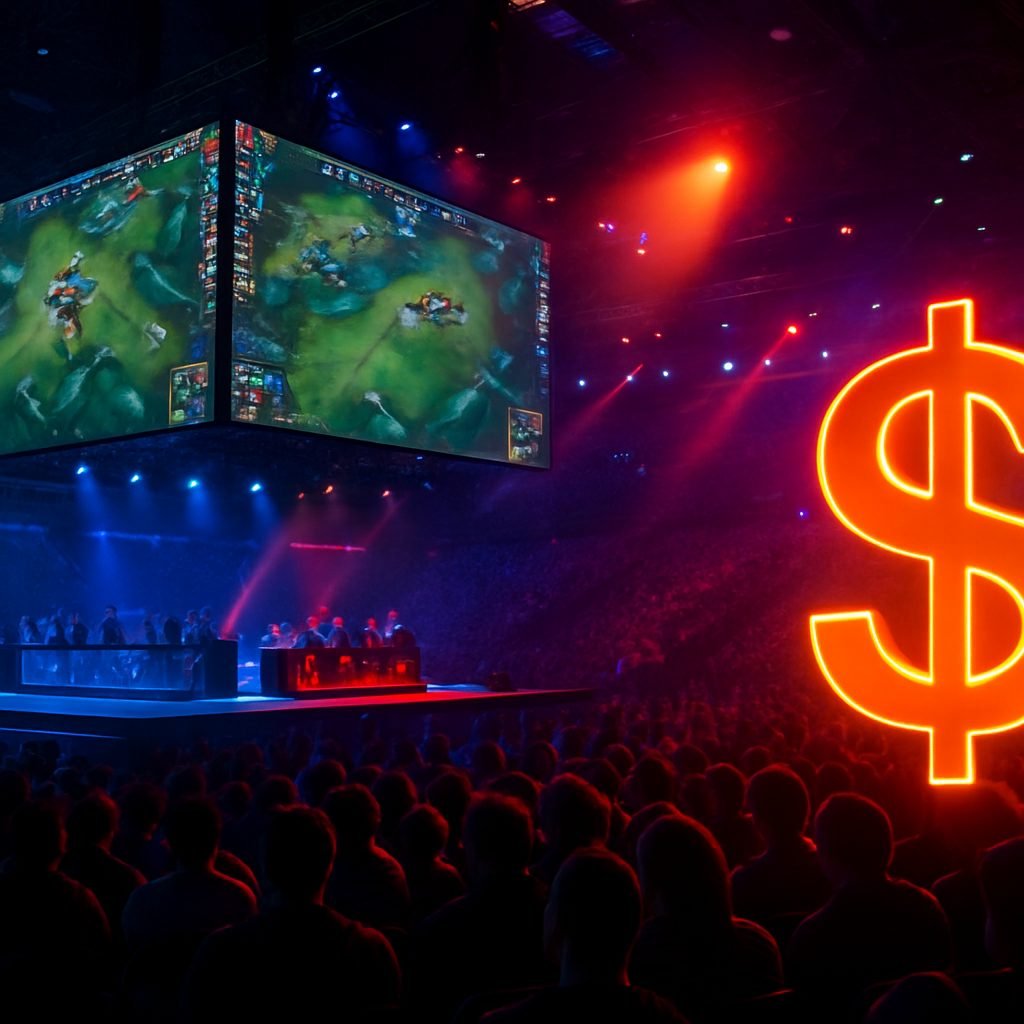
How Gaming Festivals Are Fueling the Growth of Esports Betting Worldwide
A gaming festival is no longer just a weekend for fans; it has become a concentrated growth engine for esports betting, producing predictable streaming peaks, on-site conversions, and new micro-markets. This article explains how festival formats drive betting demand with data and named case studies, highlights integrity and regulatory risks, and delivers practical recommendations for festival organizers, bookmakers, regulators and game publishers in Southeast Asia and beyond.
How gaming festivals differ from standard esports events and why that matters for betting
Concrete point: gaming festivals are composite events, not scaled-up single-match tournaments, and that structural difference changes how betting shows up, how it must be priced, and where integrity risk concentrates.
Core differences that change betting dynamics
- Mixed programming: festivals combine main-stage pro matches with side-stage qualifiers, amateur brackets, exhibitor show matches, cosplay showcases, and vendor activations. That creates many small fixtures that bookmakers can market as micro-markets but that also split liquidity.
- Concentrated footfall: large on-site audiences and high walk-in traffic create direct conversion points for account acquisition, deposits, and impulse in-play bets via QR and pop-up activations.
- Multiplexed streaming: festivals often run simultaneous feeds across main stage, side stages, and exhibitor demos on Twitch and YouTube. That produces predictable viewership spikes and fragmentation where a match with modest total viewers can still generate intense, short-lived betting volume.
- Amateur and pro-am inventory: extra match tiers mean more markets to sell, but many of those matches are thinly observed, poorly documented, and therefore more vulnerable to information asymmetry and manipulation.
Practical insight: the business trade-off is clear. Festivals give bookmakers a larger menu to sell higher-margin in-play props and novelty markets, but doing so reliably requires tighter market design and higher monitoring costs. Accepting that trade-off without operational changes leads to pricing errors or avoidable integrity exposures.
Concrete example: DreamHack is a good use case. Its LAN halls and open amateur brackets produce dozens of concurrent matches while the main stage draws global viewers. Operators who historically focused on main-stage CS GO or Dota 2 matches have had to add lightweight markets for side-stage games and adopt faster odds updates during peak festival hours, a pattern documented in festival viewership reports and industry write ups such as Esports Charts and The Esports Observer.
What people misunderstand: many assume you can treat a festival like a single big tournament and simply scale liquidity. That fails in practice. Liquidity fragments across many micro-markets, which raises spreads and forces bookmakers to choose between trimming product breadth or subsidizing markets to maintain competitive pricing.
Operational consideration: festival-driven markets require three concrete adaptations: faster odds engines for parallel streams, stricter vetting of match metadata and feeds, and pre-approved market lists that avoid tiny, opaque props on amateur fixtures. Failure to do any of these increases manual trading load and the chances of bad settlement decisions.
Next consideration: before opening festival markets, operators and organizers must agree on which fixtures are marketable, who supplies verified match data, and how monitoring signals will be shared in real time. Design that governance first, or expect higher costs and exposure during the event.
Mechanisms by which festivals drive betting volume and liquidity
Direct, concentrated attention creates tradable spikes. When a gaming festival compresses thousands of attendees and millions of concurrent stream viewers into a narrow time window, bookmakers see predictable surges in account activity and in-play turnover that are far larger than single-match events of comparable scale.
Core mechanisms
- On-site activations convert attention into accounts. QR-driven signups, pop-up betting lounges, and sponsored demos turn walk-up spectators into first-time depositors and short-term in-play bettors.
- Streaming peaks concentrate liquidity windows. Main-stage finals and stacked broadcast schedules create predictable surges where bookies can offer tighter lines and narrower spreads because volume arrives quickly.
- Expanded fixture inventory creates micro-markets. Amateur brackets, side-stage matches, show matches, and vendor-run tournaments provide hundreds of small events that let bookmakers sell long-tail props and niche markets.
- Cross-channel marketing pulls casual fans into betting. Exhibitor promotions, influencer panels, cosplay crowds, and merch halls expose non-bettors to wagering messaging; this raises new-user conversion but also raises acquisition noise.
- Information fragmentation changes odds dynamics. Multiple side streams, local-language commentary, and staggered match starts create asynchronous information flows. That increases latency-driven price moves and arbitrage windows for fast traders.
Practical trade-off: micro-markets boost margin potential but dilute liquidity.** Offering a large number of low-liability markets improves per-event revenue, but each market attracts fewer bets, forcing wider prices or higher exposure unless matched by pooled liquidity or exchange-style mechanisms.
Operational constraint that matters in practice. Festivals increase volatility in short bursts. Risk teams that treat festival days like a normal calendar will misprice in-play risk and either hit loss limits or shutter markets mid-event. You need pre-set volatility rules and dynamic liability controls for festival windows.
Concrete example: Intel Extreme Masters Katowice produces high-volume, time-concentrated viewership across multiple stages. Bookmakers routinely tighten lines for the main CS final while selectively offering props on side-stage qualifiers. That strategy captures volume when liquidity is deep and avoids liability on small, manipulable exhibition matches—a balance many operators learned during consecutive Katowice seasons and documented in industry reporting from Esports Charts and The Esports Observer.
Judgment you rarely see spelled out: the advantage belongs to operators who limit menu breadth but scale depth.** In plain terms, offering fewer markets with reliable liquidity outperforms a shotgun approach of dozens of micro-markets that each see two to three bets. Depth reduces hedging cost and preserves margin during festival volatility.
Next consideration: decide whether your operation competes on rapid, narrow-market liquidity (tight lines, high volume) or broad market coverage (many props, higher spreads). Each path scales differently across regions such as Southeast Asia and Latin America where mobile payments and festival culture change the conversion curve.
Data patterns and market evidence
Short, sharp spikes are the pattern, not a slow build. Multiple independent datasets from Esports Charts and Newzoo show that gaming festival programming produces concentrated viewership and engagement windows that map directly to elevated in-play betting turnover. These are predictable, repeatable events – finals, marquee show matches, and weekend peaks – which bookmakers can anticipate and measure.
Visible signals and the KPIs that move
- Account activity: festival weekends consistently drive higher account sign-ups and deposit conversions via on-site QR activations and mobile-first payment rails.
- In-play turnover: streaming peaks create short windows of high liquidity where average bet size and bet frequency rise – attractive for micro-markets but risky if unmanaged.
- Market breadth: festivals add fixtures – amateur brackets, show matches, side-stage games – increasing the number of low-liquidity markets a bookmaker must price.
- Retention lift or bounce-back: initial post-festival retention is modest unless operators follow up with targeted campaigns and product hooks tuned to the festival audience.
Practical insight: adding dozens of micro-markets during a festival can raise margins but also creates exposure to thin liquidity and manipulation. Operators must choose between wider market inventory and tighter, higher-quality markets – the tradeoff is margin versus integrity and matched liquidity.
Concrete example: Intel Extreme Masters Katowice provides a clean case. Viewership reports on Esports Charts show global streaming peaks during main-stage matches while bookmakers operating in those windows report measurable surges in live turnover. Festival side-events and amateur stages extended the number of marketable fixtures that week, forcing operators to adjust liability limits and market availability dynamically.
Judgment: many operators underweight the retention cost of festival-driven customers. In practice, a surge in sign-ups without follow-through onboarding and localized payment options yields a high churn cohort. Festivals create conversion opportunities – not guaranteed lifetime value – unless product, payments, and CRM are aligned with regional behaviour, particularly in Southeast Asia and Latin America.
Limitation to watch: data feeds from festival organizers can be inconsistent – side-stage matches may not appear on official feeds or may have delayed timestamps. That creates information asymmetry between bookmakers and bettors and increases the risk of suspicious betting patterns. Insist on verified match data and arrange live monitoring with accredited integrity partners such as ESIC.
Takeaway: treat festival data as operational triggers – schedule capacity, tighten monitoring on low-profile fixtures, and design retention flows specifically for festival sign-ups. The next consideration is how to convert those short windows into steady liquidity without increasing integrity risk.
Named case studies: DreamHack, Intel Extreme Masters Katowice, ESL One Cologne, and Gamescom
Concrete assertion: These four events are not interchangeable – each supplies distinct audiences, marketable fixtures, and integrity profiles that bookmakers must address with different playbooks.
DreamHack – LAN culture that seeds grassroots betting
Key point: DreamHacks core strength is physical LAN halls and amateur tournaments that create high-volume, short-tail customer acquisition opportunities.
Practical insight: On-site activations at DreamHack convert casual attendees into accounts more reliably than broadcast-only events, but those accounts often have lower average lifetime value and higher churn. That trade-off matters: you get volume fast, but monetization requires follow-up offers and retention plans rather than one-off promos.
Use case: A bookmaker running a DreamHack activation can deploy QR-driven account creation booths tied to same-day free bet credit. In practice that produces a spike in first deposits and heavy in-play activity on amateur brackets for 48 to 72 hours, then a steep drop unless retention campaigns kick in.
Intel Extreme Masters Katowice – predictable peaks, low mispricing tolerance
Key point: IEM Katowice behaves like a global major for titles such as CS:GO. Streaming peaks are large and predictable, which compresses margins on marquee markets and exposes liquidity problems for smaller operators.
Practical insight: Major-stage festivals require prepositioned liquidity and sharper risk rules. In-play markets at IEM finals attract professional bettors and syndicates; trying to match volume with wide limits without hedging will produce losses. Better approach is selective market depth plus diversified micro-markets for props and player-level events.
Use case: During IEM finals, a sportsbook that limited liability on match totals but expanded live prop markets for pistol rounds and map handicaps preserved margin while still capturing elevated turnover. Streaming data from Esports Charts shows these finals create the kinds of viewer spikes that drive concentrated betting windows.
ESL One Cologne – brand equity that supports seasonal lifecycle bets
Key point: ESL One Cologne is a recurring festival with strong brand resonance. That makes it ideal for season-long acquisition strategies rather than single-event gambits.
Practical insight: Repeating festivals let bookmakers amortize acquisition cost across multiple betting products – futures, match accumulators, and loyalty-based promos. The trade-off is that established events attract casual loyalty that can mask match-quality variance, so risk models must account for public-bias-driven volumes.
Use case: An operator ran a season card tied to ESL One Cologne that rewarded cumulative stakes over multiple matches. That increased retention and average bet frequency, but required tighter limits on low-liquidity side matches to avoid integrity exposure.
Gamescom – mainstream scale and the casual-to-bettor conversion problem
Key point: Gamescom is a broad gaming festival and expo rather than a pure esports tournament. It brings mainstream gamers, families, and nontraditional audiences that are valuable for long-term market expansion.
Practical insight: Converting Gamescom attendees into responsible bettors requires different creative plus compliance guardrails – onboarding flows must prioritize age verification and education because attendee intent is mixed. The trade-off is higher customer acquisition cost and heavier compliance overhead, but the upside is access to younger, mobile-first markets important in Southeast Asia and Latin America.
Use case: A sportsbook partnered with exhibitors to offer AR demos that included optional signup incentives. The activation delivered strong registrant numbers, but the operator had to suspend a share of accounts during KYC checks, which increased short-term operational cost.
Next consideration: Choose festival-specific market design and integrity partners before the event schedule is published – doing this during the launch window is much harder and raises both commercial and compliance risk.
Integrity, regulation, and responsible gambling around festival-driven betting
Straight to the point: festival-driven betting amplifies both opportunity and vulnerability. When a gaming festival concentrates dozens of matches, side events, and public-facing amateur brackets into a single weekend, the number of low-profile fixtures that can attract market activity rises sharply — and those fixtures are where integrity and responsible-gambling risks live.
Primary risks to manage
- Increased low-scrutiny fixtures: amateur, show, and regional matches often lack historical data and monitoring, making them susceptible to manipulation and suspicious betting patterns.
- Jurisdictional friction: festivals pull international audiences; remote bettors sitting in different legal regimes create geofencing, licensing, and KYC complexity for bookmakers and organizers.
- Information asymmetry: organizers, stream teams, or exhibitors may have privileged knowledge about rosters or match intent that leaks into markets before public disclosure.
- Conversion versus protection tradeoff: aggressive on-site acquisition (fast KYC, QR signups, cash kiosks) raises account growth but weakens verification and anti-fraud controls.
Practical mitigation: combine contractual, technical, and front-of-house controls rather than relying on any single layer. Contracts without operational enforcement are window dressing; monitoring without clear data feeds is blind; and heavy-handed controls that break the customer journey simply push risk back into unregulated channels.
Operational controls that work in practice
- Segmented market design: disallow or limit exotic micro-markets on amateur or side-stage matches. Offer single-outcome lines with capped liabilities until integrity checks clear the fixture.
- Accredited monitoring: require festival organizers to provide live match logs and direct telemetry to accredited bodies such as ESIC or independent monitoring vendors; bookmakers must feed suspicious signals back immediately.
- Verified data feeds: insist on official, time-stamped score and roster feeds to prevent manual manipulation of odds; public streams should be time-synced to those feeds.
- Adaptive KYC at events: use tiered onboarding – a fast-registration option that permits viewing and account creation, and a verified-deposit path for wagering above set thresholds. This preserves conversion while protecting higher-risk flows.
Tradeoff to accept: stricter pre-match controls reduce impulse in-play volume but increase long-term trust and reduce costly investigations. In practice, losing 5-10 percent of short-term turnover is preferable to a single integrity incident that damages brand access or triggers regulator action.
Concrete example: a Southeast Asian LAN-party turned regional festival implemented a two-tier model: attendees could scan a QR to create a wallet and place free-play bets, but real-money wagers required a quick ID scan at a staffed kiosk and a mobile payment authentication. The result: rapid onsite signups with a measurable reduction in chargebacks and suspicious-bet alerts compared with previous festivals that used email-only signups.
Regulatory posture and what stakeholders must do: regulators should publish festival-specific guidance on age verification, cross-border betting, and data-sharing. Festival organizers must include enforceable integrity clauses in bookmaker agreements and give monitoring firms good access. Bookmakers need playbooks for festival risk limits, immediate alerting procedures, and post-event audits tied to retention and liability metrics.
If you take one action this season, mandate an official, time-stamped match feed and a direct line to an accredited monitor before you allow any betting markets on side-stage or amateur fixtures.
Commercial models and partnership opportunities for bookmakers and festival organizers
Market fact: festival economics let bookmakers and organizers monetize the same spike in attention with very different commercial structures. Sponsors buy reach, operators buy turnover, and organizers sell audience access. The practical question is which arrangement balances revenue, integrity exposure, and brand fit for a given gaming festival.
Primary commercial models and their trade-offs
- Sponsorship and naming rights: cash-rich bookmakers take title or stage sponsorships for visibility. Trade-off – high public visibility raises reputational and regulatory scrutiny at family-friendly festivals.
- Official odds provider & data licensing: operator pays for exclusive access to match metadata and timing, enabling clean market creation. Trade-off – exclusivity speeds go-to-market but reduces neutral data distribution to integrity partners unless contractually required.
- Revenue-share and affiliate partnerships: low-friction model where organizers sell customer access and conversion paths. Trade-off – simpler to set up but harder to measure attribution and lifetime value.
- White-label or pop-up sportsbooks: operator supplies a branded experience inside the venue; organizer gets a cut or flat fee. Trade-off – dependency on operator infrastructure for KYC and payments increases operational complexity for the organizer.
- On-site activations and experiential spaces: betting lounges, AR/VR cross-sells, and QR-driven account signups. Trade-off – high conversion at events but potential to encourage impulsive wagering without strong responsible-gambling controls.
- Micro-market and prop market partnerships: tailor in-play markets for side-stage or showmatches to capture high-margin action. Trade-off – these markets are data-hungry and vulnerable to information asymmetry if organizers do not share verified feeds.
Contract mechanics that matter. Insist on clear integrity clauses, data access rights for accredited monitors, liability caps, and KYC responsibility split. Organizers must demand the right to audit betting activity tied to their event schedule. Bookmakers should require exclusivity windows only when they secure verified match data and commit to funding integrity monitoring.
Practical insight: exclusivity sounds lucrative but often delivers lower net returns than flexible revenue-share because it forces organizers to accept a single operator that may not activate local payments or audience-preferred wallet options. In Southeast Asia, integration with regional e-wallets and mobile payments can matter more than top-line sponsorship fees.
Concrete example: At a regional mobile gaming festival in Jakarta, an operator deployed a temporary, cashless betting lounge tied to amateur mobile tournaments and pop-up esports showmatches. Account signups rose during the weekend, but organizers restricted signage in family areas and required the operator to implement on-site KYC and deposit limits. The result was solid short-term conversion while containing brand and regulatory exposure.
Product and commercial innovations to prioritize
- Market segmentation: offer hardened markets for headline pro matches and conservative, low-liability props for side events to reduce integrity risk.
- Shared telemetry and verified feeds: require publishers or organizers to provide time-stamped, signed match feeds – this is non-negotiable for reliable micro-markets and for meeting ESIC expectations – see ESIC.
- Mobile-first payments and localized onboarding: integrate regional e-wallets and lightweight KYC for festival-driven conversions; conversion wins the day in fast-moving festival windows.
- Measurement contracts: tie a portion of fees to agreed KPIs – signups, deposit conversions, or average bet size – to align incentives between organizer and operator.
Next consideration: negotiate data rights and monitoring access before any exclusivity is signed – lack of verifiable feeds is the single biggest operational failure mode when bookmakers try to launch festival-specific markets. For background on sponsorship and market impacts consult reporting from Esports Observer.
Actionable recommendations for stakeholders
Start with enforceable contracts, not ideas. Festival activations that expand betting markets need binding clauses on data access, integrity audits, and dispute resolution before any commercial activation is sold. Without these clauses organizers and bookmakers trade short term revenue for long term reputational risk.
For festival organizers
- Embed integrity into RFPs: Require prospective partners to show accredited monitoring relationships such as with ESIC and to accept live data audits during the event.
- Operationalize responsible gambling on site: Staff a visible responsible gambling desk, run age verification checkpoints tied to ticketing, and require any on-site bookmaker to present deposit limit options at sign-up.
- Design predictable broadcast windows: Limit last-minute exhibition matches that create opaque markets; fixed scheduling reduces information asymmetry for bookmakers and monitors.
- Balance exhibitor revenue with market risk: Offer tiered sponsor packages where higher-value activations buy fewer in-play market permissions. This preserves integrity while keeping sponsorship income.
For bookmakers and sportsbook product teams
- Use controlled market design: Prioritize a small set of reliable micro-markets for festival side-stage and amateur matches rather than broad, low-liquidity props that invite manipulation.
- Share anonymized signals: Provide integrity partners with aggregated betflow and suspicious activity flags in real time; transparency reduces false positives and speeds investigations.
- Operational readiness checklist: Pre-configure geofencing, mobile payment routes common in the region, and an emergency market suspend workflow with 5 minute SLAs.
- Acquire with restraint: Run acquisition funnels that emphasize KYC and education over impulse incentives. Festival sign-up conversion is cheap, retention on poor quality accounts is not.
For regulators and game publishers
- Publish minimum data feed standards: Require official match logs for any market a bookmaker offers and make feed access part of festival licensing.
- Harmonize cross-border guidance: For multi-jurisdiction festivals, regulators should publish interoperable KYC and geofencing expectations to reduce enforcement gaps.
- Limit unsanctioned fixtures: Publishers should gatekeep official event listings and discourage high-frequency exhibition matches that create opaque markets.
Practical tradeoff to accept. Rich festival markets increase per-event margin, but they also increase monitoring cost and latency risk. The right balance is not zero innovation; it is disciplined expansion where each new market has a pre-defined liquidity threshold and an automatic suspend rule when thresholds are not met.
Concrete Example: At a regional gaming festival in Southeast Asia a bookmaker launched a geofenced sign-up drive and three controlled in-play micro-markets for amateur side events. The operator capped liability per market, shared anonymized betflow with an accredited monitor, and suspended any market with fewer than 50 unique bets in the first 10 minutes. The activation delivered high conversion without triggering integrity investigations, proving that constraint improves both safety and commercial outcomes.
What many get wrong. Treating the gaming festival window as solely a marketing channel is an outdated view. In practice the festival is an operational event that requires engineering, trust and compliance alignment across four teams: product, trading, legal, and venue operations. If any of those teams are missing, the activation will either fail to convert or produce avoidable risk.
Next consideration. Implement one controlled pilot at the next gaming festival – limited markets, pre-agreed data sharing, and hard suspend rules – then iterate from KPI outcomes rather than assumptions.
Forward-looking perspective: what the next five years look like
Short prediction: gaming festival-driven betting will move from episodic spikes to predictable seasonal revenue for bookmakers, but only where three things line up – mobile payment access, verified live-data feeds, and festival-safe market design. Without that convergence festival interest produces noise, not durable volume.
What will change and why it matters
Technology will shape the fastest changes. Expect AR overlays, richer stat feeds, and mobile-first wallets to make in-play props more granular and more tempting for casual attendees. That increases turnover but raises latency and information asymmetry problems that did not exist at this scale five years ago.
- Hyper-local festival markets: Bookmakers will open region-specific micro-markets during local gaming festivals to match language and payment preferences, especially in Southeast Asia and Latin America.
- Real-time feed reliance: Festivals that provide authenticated, low-latency match data will attract higher-value markets. Those that do not will see operators either widen spreads or refuse markets altogether.
- Identity and payment innovation: Festival ticketing tied to verified wallets or mobile IDs will speed KYC and reduce deposit friction, but that raises privacy and regulatory tradeoffs for organizers.
Tradeoff to watch: finer, more numerous markets increase margin opportunity but magnify integrity exposure. Operators who chase long-tail props without faster monitoring and stronger data provenance will face elevated disputed-bet rates and regulatory pushback.
Concrete example: At a recent mobile gaming festival in Manila organizers and several bookmakers trialed a QR-driven sign-up flow tied to a mobile wallet. Bookmakers offered short-duration micro-markets for a mobile title tournament run on-site; conversion was fast because deposits were local-currency and instant, but several markets had to be suspended when a side-stage match lacked an authenticated feed. This shows the upside of local payments and the downside of incomplete data.
Regional focus and practical consequence. Southeast Asia and Latin America will lead festival-to-betting growth because high mobile adoption and offline festival density reduce the friction between attendance and wagering. However growth will be uneven: markets that do not upgrade monitoring, KYC, and feed quality will be limited to low-margin markets or blocked by regulators.
Meaningful judgment: Festival growth is not automatic. The next five years separate organizers who treat betting as a partnered revenue stream and those who enable it by default. The former will scale safely; the latter will trigger crackdowns.
Next consideration – stakeholders need to treat festivals as product launches, not one-off events. That means building playbooks now for authenticated feeds, latency monitoring, and local payment partnerships so the next wave of gaming festival audiences convert to reliable bettors without triggering integrity or regulatory setbacks.